Sunday, August 21, 2022

Fifty States Plus!

In my recent road trip, I bagged my 50th state.  I decided to write random memories of the states (listed in order of visitation, more or less.) The memories are not necessarily from the trip mentioned but, instead, just random memories of the times I have been there... It adds up to 51 as I put in D.C. separately, and let's make it a state! (And make Puerto Rico a state, too, assuming they still want it.)

  1. California: well, too many. LIFE!

First Road Trip - to Mom's High School Reunion -around 1961?

  1. Nevada : gambling, empty vistas, not a lot of trees, Valley of Fire, Keith, California Hotel, Margie, Burning Man

  2. Utah : Salt flats, amazing National Parks, Lynn, Temple Square

  3. Colorado: mountains, Denny's in Denver, Jon Benet's house followed immediately by a tornado (only one I ever saw – in Boulder), Darien

  4. Kansas: Dodge City, Mom, pretty flat - It was clear to me on this trip that I was "a different kinda girl", Mildred's graveyard.

  5. Oklahoma: drawing a blank - sorry Oklahoma - a lot like a lot of Northern Texas is my only memory

  6. New Mexico: red rock, petrified rock (diarrhea), Terrero/Dad, balloon fiesta/ Tom and Roxanne, Patty and Dennis, yellow aspens, Meow Wolf, bats and Carlsbad, snow storm on 40 (had to go south to 10)

  7. Arizona: red rock, Grand Canyon, Watching Dodgers 88 game in an Indian bar, watching the final at Grand Canyon, Tomoe, saguaros, Tucson's front yards, Julie Rowe

Second Road Trip with Lisa Sweet to see our amours (Karen and Jeff) in 1973

  1. Missouri: St. Louis arches, the first time I saw the Mississippi

  2. Illinois: Chicago, Susan, Wilmette (Jane at a Grocery store), Mercantile Exchange, Right-field sucks, No lights at Wrigley! campaign, Joan, Ryan, architectural tour, clean downtown!

  3. Indiana: nice people

  4. Ohio: Don and Mary, Herman, restaurant, rolling hills and car sick, Amish families that Mary hires, Bill and Kelly, the Chagrin Falls parade

  5. West Virginia: Karen, Lisa Sweet, one of the strangest days of my life, snow

  6. New York: Ithaca, what winter looks like in the East when snow is not on the ground (like a forest fire has just passed through) and how lovely spring is for those folks, New York City, standing room opera, Jean, honeymoon, party on our roof, Palmyra - way too many memories to fit...

Road trip with my partner, Susan Cahn, around the country - stopping to see her parents in Chicago. 1980

  1. Wyoming: Yellowstone, which was awesome, during the fire in 88 (with Leslie) which was interesting

  2. Nebraska: Nice skies; a lot like Kansas

  3. Iowa: Nice skies; a lot like Nebraska, Jessica and Jim

  4. Pennsylvania: Brett, Philly and their very small streets

  5. New Jersey: Tami, Susan B, Kristin and staying in a funeral home, Kristin's wedding, Princeton and Patty Cuyler and family, the shore after Hurricane Sandy

  6. Connecticut: visiting Judy at Yale (kill Nilda); visiting Barbara

  7. Massachusetts: sitting on Einstein's lap, rude staff at the Subway, Pat

  8. Rhode Island: in this state the very shortest - it was a highway

  9. Delaware: pretty much the same as Rhode Island

  10. Maryland: Susan M, Susan's Condo, Alfred House, Johns Hopkins, the purple line, the Angel Moroni when you drive at night on 495

  11. DC: March on Washington for Gay Rights (Big Dyke clump), Steve Gunderson (gay Republican congressman), Andrew Sullivan convincing me that Leslie and I should get married, museums - free!, memorials, Lincoln Center, Ruth Ginsberg; Marianne and Harold and staying at the Watergate, Supreme Court, Jesse Ventura, Million Mom March for gun control/ Mom and Mary/ Karen - and much more

  12. Virginia: a lot of trees, one really bad night at a motel

  13. Tennessee: Nashville, Knoxville, Karen, Tobae's brother and sister-in-law, nice skies

  14. Arkansas: Sitting on the runway in Little Rock for five hours; I have driven through it too but got nothing.

  15. Texas: Austin and Paul Ruiz, Broken Spoke, Two-stepping, Cotton-Eye Joe, Galveston and Betsy Lee

'88 Three-month trip with Leslie around the country after she took her bar exam

  1. Oregon: Eugene and Joanne/Pa and DJ, Portland - Dan, Erin and Tim, Karen (oboe) 

  2. Washington: Jessica and Jim, Russ/ Tobae; Ken/Marni and too many others to name, but driving with Lisa and Stephen "Again", lots of bridges, Bainbridge, two bar mitzvahs, Wagner/Seattle Opera road trips, Spokane, Julie aka Alex, Sandy/Tom

  3. Idaho: Lisa and Tom and Lake Coeur d'Alene, my trip to visit Richard H. but covid hit, then he died. So I don't know Boise.

  4. Montana: It was just fine. Rural

  5. South Dakota: Rapid City! Fights with Florida for having the greatest riches of tacky tourist traps (and some not tacky). Dinosaur Park at the best real estate in the City! Flintstone Land. Wall Drugs. Mt Rushmore (not tacky - but many tacky imitations about). Black Hills Holy Land. Corn Palace and more! Crazy Horse memorial (which I am going to blog about soon)

  6. Minnesota: St. Paul; Randy Travis and the Judds

  7. Wisconsin: Judy and Margie, Snow, No coats

  8. Vermont: Horse farm, fence judge, they don't like Californians

  9. New Hampshire: drove through; too many trees (true of most of the East Coast!)

  10. Maine: Kennebunk River rafting (floating!!), the coast

  11. North Carolina: Sandy and her family, the Bull in Durham, Case is in Greensboro so I have another visit to do

  12. South Carolina: Charleston

  13. Georgia: Savannah - Midnight in the Garden of Good and Evil tourism including Mercer's grave

  14. Florida: In order: St. St. Augustine; driving on Daytona beach; Orlando; Miami Beach; Miami; Key Largo; Key West and the southern most this and that; daily night festival; Cypress Knee Museum and Tom Haskins,"the ditches made the problem"; Everglades - mosquitos and alligators; Weeki Wachee and coke drinking mermaids, baby; Dali museum - and, on another trip - the circus at Florida State and glass-bottom boat on some of those amazing Florida springs. Seriously fun state 

  15. Alabama: Seemed nice enough...

  16. Mississippi: Gulf Coast is gorgeous - or was; don't know how it is post-Katrina

  17. Louisiana: New Orleans. Stay off Bourbon St, and it is quite fun and not too rowdy. Too much alcohol spilled on Bourbon St. Valerie. Crawdads. Catherine Hancock.

1991 with Leslie

  1. Hawaii: It may have been my 47th state but, like California, too many memories! But - Lava. It really is paradise.

1999 with Leslie (two trips that year)

  1. Alaska - Aurora Borealis, Ice sculpture festival, looooong, beautiful sunsets, nice people, snow, flying over Denali, Iditarod and other dog sledding, Ziggy running in the snow, house/neighborhood in Fairbanks, Makai and Ziggy.

2019 road trip by myself

  1. Kentucky - bourbon and horses; Claiborne Farm and Secretariat's grave. Great rocks - gorgeous highway cutouts.

  2. Michigan - Detroit and outside 8 mile, too. Lynn, Belle Island, the museum and the library; Linda, Jessica and and Frazho road. Tiger Stadium and downtown. Fascinating place. Buy property there - inside the City. Best opportunity in America that I have seen.

2023 road trip by myself

  1. North Dakota Hankinson, baby!  And, part of the song Lisa D and I wrote when she had to move to Minot AFB in her soph year:  "Why not go to Minot!  It would be so grand..."  And, better yet:  "Cows are frozen stiff there. Snow is apt to drift there. Minot is the place to be! Why don't you go and see!"

******

Bonus: 1997 with Leslie

Puerto Rico - Worst drivers ever, love PR women, Vieques, Bioluminescent Bay

U.S. Virgin Islands - Great hotel in Saint Thomas but I much preferred Virgin Gorda (British Virginia Islands)

Five Favorite States (including D.C.) I have had the most fun in order:

1. California

2. Hawaii

3. New York

4. Washington, D.C.

5. Florida

Favorite Cities

1. New York

2. Chicago (shot from nowhere to 2 after my recent visit)

3. Washington, D.C.

4. L.A.

5. Austin

States I haven't really given a chance:

1. Rhode Island

2. Delaware

States I have plenty of time in and that's all I need, thanks. They were fine.

1. Oklahoma

2. Montana

3. New England states (but we might go to Mass. again to see Pat and Katie and NH to see Barbara)

4. Alabama

5. Mississippi

Favorite things I have seen

1.  Hot lava many, many times.


At a skylight, with a lava river underneath


2. The aurora borealis, many times.


In Fairbanks


Thursday, November 4, 2021

The Kenneth L. Karst Racial Equity Foundation


As you can see by the logo, Leslie and I have now created a foundation for racial equity to honor and extend Ken Karst's legacy.  The website is here. The type of projects we plan on supporting will be good for the climate, bring people of all races together, and serve a broad need in poor areas. For instance (pre-foundation), we gave to the project Keep Growing Detroit which helps to address the problem of the food desert that is urban Detroit (though, because of projects like this, that city is moving quickly towards a much better food future.) They are not only farming and raising healthy local food, but they are teaching others to farm or garden and giving them the means to do it. 

What Ken focused on academically was how to ensure opportunity and full citizenship for all, given our country's failure to do so for most of the United States history. This failure left many people behind, and it is those communities who will be the focus of the Foundation. And our vision of racial equity absolutely does include all who were left behind. Many whites have also been the victim of our tax and other economic policies that have hurt all poor people, while giving billions to a small segment of society. The Foundation will support causes that help everyone who has been the victim of these policies, and we are working with other like-minded groups towards broad-base community solutions.

The first initiative of the Foundation has been to endow a scholarship in Ken’s name at the UCLA School of Law, which will exist in perpetuity.  It is important both to us and to the law school that the students selected to receive this scholarship (who must be in need of financial aid) demonstrate those traits possessed by Ken—not only academic excellence and a commitment to racial equity, but also a belief in community, tolerance, civility, openness, listening, generosity, and kindness. As UCLA law professor Adam Winkler said of Ken at his memorial, Ken’s intent as a teacher “was not to mold people to his view, but to open them up to the views of others.”

Good thinkers and writers do matter, particularly if they have the characteristics that Ken possessed. And while I have no expectations that anyone will do so, feel free to contribute to the fund here: Kenneth L. Karst Endowed Scholarship in Law

Coda:

So, that's what I've been doing. I have to admit that it does have a shaggy dog story element. Basically, people often ask what's going on with me. Since the beginning of this decision to make the foundation, I have been very busy working on it, as well as many other already existing pursuits. But a starting a foundation is not something one can casually drop into a conversation. On the other hand, it's hard to tell the backdrop without, perhaps, going on a bit long.  Which is to say, I haven't figured out my elevator pitch.

When I had a car accident in high school, I made copies of the story of why my face was messed up to pass out so I didn't have to recount it over and over again. I have used that as a template from then on. So, for instance, when I got the throat cancer, I told people to just read the blog I'd written about the experience.

So, basically my motivation for this particular blog series was to be able to have this conversation:

What's going on with you, Robin?”

I'm very busy.”

And if they pursue the conversation, then I can just send them a link to my blog! VoilĂ !

And for those who actually read the whole thing, thank you!! Any questions?


Tuesday, November 2, 2021

Kenneth L. Karst (and how he relates to what is going on with me)


Kenneth L. Karst was my father-in-law and, much more to the point, a legendary UCLA law professor. If you watched the RBG video about Ken, you know he was considered to be quite special in the legal community. To quote UCLA Dean Jennifer Moonkin about his work: “Ken was deeply dedicated to addressing systemic inequities and pursuing societal change through his exceptional body of legal scholarship focused on First, Fifth, and Fourteenth amendments; women's rights; affirmative action; civil rights and discrimination; gay and lesbian rights; lawyers and social change; and land-use reform in Latin America.” Not only that, but Ken's scholarship was both totally readable (unlike many a law review article), and also full of compassion, humor and humility. He was not merely right; he was also passionate, articulate and persuasive.

My wife Leslie and I feel particularly impacted by his ground-breaking work on gay rights. In the 1980 Yale Law Review article,  The Freedom of Intimate Association, Ken first articulated the ideas and arguments that ultimately were restated in Justice Kennedy's majority opinion in Obergefell v. Hodges (the 2015 gay marriage decision).  (The PDF takes a while to load, but if you want to take the time, it's a great read!) Kennedy's majority opinion fully embraced the logic and compassion articulated by Ken 35 years earlier. We believe that, but for that article, gay marriage acceptance itself would have been pushed some years into the future. Through convincing Kennedy, we won–much faster than anyone (including Ken!) would ever have guessed. The ruling, by the way, was very appropriately handed down on Ken’s birthday, to his great joy in the twilight of his career.

Check out this short clip which opens the 1993 movie The Pelican Brief, with both Julia Roberts and Cynthia Nixon arguing Ken's positions re sodomy laws. When the Cynthia Nixon character says the word “intimate”–bingo–that came directly from Ken. He created the constitutional concept that Justice Brennan lifted and used four years later in the Supreme Court opinion Roberts vs. U.S. Jaycees, thus becoming part of Supreme Court doctrine.   And yes, the Julia Roberts line at the end of the clip is correct: The Supreme Court was wrong in Bowers v Hardwick, and they later overturned all sodomy laws in 2003, which was certainly the most important precondition to gay marriage becoming law in 2015.

I could go on and on about Ken's great work, but how does it relate to what the hell is going on with me? 

When he got this appointment at UCLA, Ken and his wife Smiley, naturally, looked for a nice neighborhood near the university with good schools for their four children. They paid $69,000 in 1965, which was a stretch for their budget but, given his tenured position, they figured they would be ok. This was the sort of neighborhood that was segregated by design, as I discussed in my last blog post. There were no blacks in the neighborhood; they had long since been pushed into the ghettos of LA and would not have been accepted in that community at that time even if some had had the resources to buy there.

Ken and Smiley both passed away in the last few years, and the house sold for a bundle, of which Leslie and I received a quarter in an inheritance. It's not at all fair, as I wrote about earlier in this series. I already expressed that I want to consume less due to climate change in the future. I already addressed  that these housing price excesses exist mainly due to the forced segregation of the 20th century, and the zoning laws that came with the white enclaves.   Leslie (and I) already received financial and other sorts of other help from Ken and Smiley before their deaths. 

This is what is meant by accumulated white privilege. Therefore, we believe it's not really legitimately ours, and that we need to do something toward racial equity with this money. 

What exactly we are doing is coming in the next blog! 

Saturday, October 30, 2021

The generational wealth gap

I believe it might be the insane level of housing wealth that mostly-white people hold in America which finally woke me up to the issues of structural racism that is embedded so deeply in our country.

This post is going to focus on Black history and its consequences. Obviously, other people of color, particularly indigenous communities (and some white folks, too), have been totally screwed-over as well.  There's caste and class and race, and it is a complicated story. Can't write about it all! I will just show you this partial chart for a snapshot of the problem in terms of wealth. 


The wealth gap is continually growing larger–it's doubled since 1989.

The film that really set me down the path of diving into this Bob Herbert film about the making of the Black middle class, Chasing the Dream. I know I posted it several years ago at the time it came out. I was struck at the time–and remain struck–by how heroic every single Black person who clawed their way into the middle class in the mid-20th century was, given the so-called racial discrimination of the time. 

I say “so-called” because that is just too weak a term. It was very close to South African apartheid or the Nazi Nuremberg laws against the Jews. I am not just talking about the beyond-horrific Jim Crow South. I mean the nation-wide federal, state and local governments' efforts–and success–to maintain the Black population as a lower caste, trapped within urban ghettos or in poor rural areas with extremely poor schools, with virtually no access to credit, no access to mortgages, little access to higher education or well-paying jobs. The suburbs, or "exclusive parts" of cities were planned and executed to be white, with well-funded schools, parks, trees, etc.–with plenty of access to credit and mortgages and good jobs. The plan was–and succeeded in being–to keep whites as the dominant caste. 

If you don't know the history how forced segregation happened, I strongly urge you watch the 17 minute film I posted yesterday on Facebook, or watch it here: Segregated by Design 

The ending of these laws and practices happened gradually as the civil rights movement grew in the mid-20th century. The tide started to slowly turn with Supreme Court cases in the late '40s and '50s and  through the Civil Rights legislation in the mid to late '60s. But the damage had been done already, via slavery followed by the caste-based apartheid. And there was little help at all after the recognition of our grievous transgressions (except for a brief period of time during which there was “affirmative action”). There were no reparations for slavery (or even an apology!). No promised 40 acres and a mule. No remedies for the unconstitutional and unconscionable government policies that ensured and enshrined urban ghettos in the first half of the 20th century. Given the scope of the wealth stolen from Black people, this is an outrage.

White people have much more wealth than they should because of this history. It's called historically accumulated white privilege–and I have it for sure. Currently 86% of the household wealth is held in white families, who make up 60% of the population. To dismantle it, we need to start with big tax initiatives such as ending the stepped-up basis for assets at death, reinstating estate taxes at lower levels, eliminating the social security cap, increasing the tax on capital gains, and other such policies that currently keep the rich richer. This will help all poor people, regardless of color.

That said, we seem a long way from fixing it through our government. But I can, at least, do my part and encourage others to do theirs. We are in the process of the “great wealth transfer” as baby boomers offload their money to their heirs. I believe we need to rethink inheritance, which by law and custom is designed to keep the “haves” with a disproportionate share of wealth. I already blogged about that here.


Tuesday, October 19, 2021

Moral Change Number One

As I said in my facebook posts, I have had a change in my focus in life for personal moral reasons. For most of my time with Leslie, my focus was to invest our money so we could have a comfortable retirement. I have never been a fan of capitalism, but my desire for early retirement led me to use the tax laws and investment opportunities that existed for wealth acquisition. (I feel compelled to point out that those laws and opportunities are available only for those in a position to take advantage of them, which many are not). And,  of course, it is the only game in town. Without investments, there is no way we would be retired today.  And I do like being retired very, very much.

So, what has changed?

Climate change is one of the two big drivers of my change of heart about what I should be doing with my life and money. Even though I have certainly been aware of the science, and the dire situation we are in, for decades, I really didn't change anything in my behavior to reflect that. A lot of it is my deep pessimism about people–that most would not do the right thing, so why should I sacrifice myself when I was already better in carbon-using behaviors than many–maybe even most–equally well-off folks? And what would denying myself possibly do in any case, given that it would be like a drop of water in an ocean? And of course, I know that change primarily has to come from governments and corporations.

Leslie and I have never been big consumers–some of that is just in our nature, but a lot of that was related to our desire to retire early, which we accomplished. But, my decisions were never driven with climate change as a key factor.

Then I read–upon (my brother-in-law) Doug Peterson's suggestion–The Story of More by Hope Jahren.

Basically, she just made me wake up to the fact that it is the morally responsible thing to do to use less, fly less, drive less, eat less “bad” food like meat that has a big carbon footprint, and so forth. I have no illusion that individual action is the key to solving climate change. What can I say? I just now feel compelled to consume less for moral reasons.

The big reason I came to this moral underpinning is the innocent victims of our capitalism run amuck–the world's poor–who did absolutely nothing to create the problem, but whose lives are now greatly affected due to the effects of climate change–be it ocean level rise, increased flooding or increased heat and droughts. Real people have suffered greatly while I had just floated through life in a world of plenty. And, clearly, it's going to get much worse for them. I will, it's true, continue to float.

Let me say, I am not trying to be holier than thou. Leslie might disagreed as I have done some arm-twisting with her, but she is my partner in life. We had to come to an understanding. That said, this is a personal thing, and I get totally why other people (including Leslie, to some degree) say “fuck it.”

And it doesn't mean that I will become a hermit and give away all my worldly possessions. I am just a selfish Westerner like most of the rest of us. It's ok to think I am a hypocrite! I think I am. That said we are doing less. Less meat. Less gasoline. Less flying. In other words, I do sacrifice things that I did not used to. It is now a conscious factor on my mind in a way it did not used to be.

The thing that I feel most bad about, but am keeping it as it is, is having a second home where flight is necessary. I was–I said to Leslie–willing to sacrifice having a second home here in Hilo to align my morality with my actions. I was hoping, I am afraid to admit, that she wouldn't call my bluff as I love Hilo so much. (And she did not.) Now, I would leave Santa Cruz and just live in Hilo, but I know Leslie would never do that. So, for now, I will fly twice a year–and try to keep any other flying down to once every, say, five years.

So, obviously, if I travel less, and consume less–I will need less money, right?

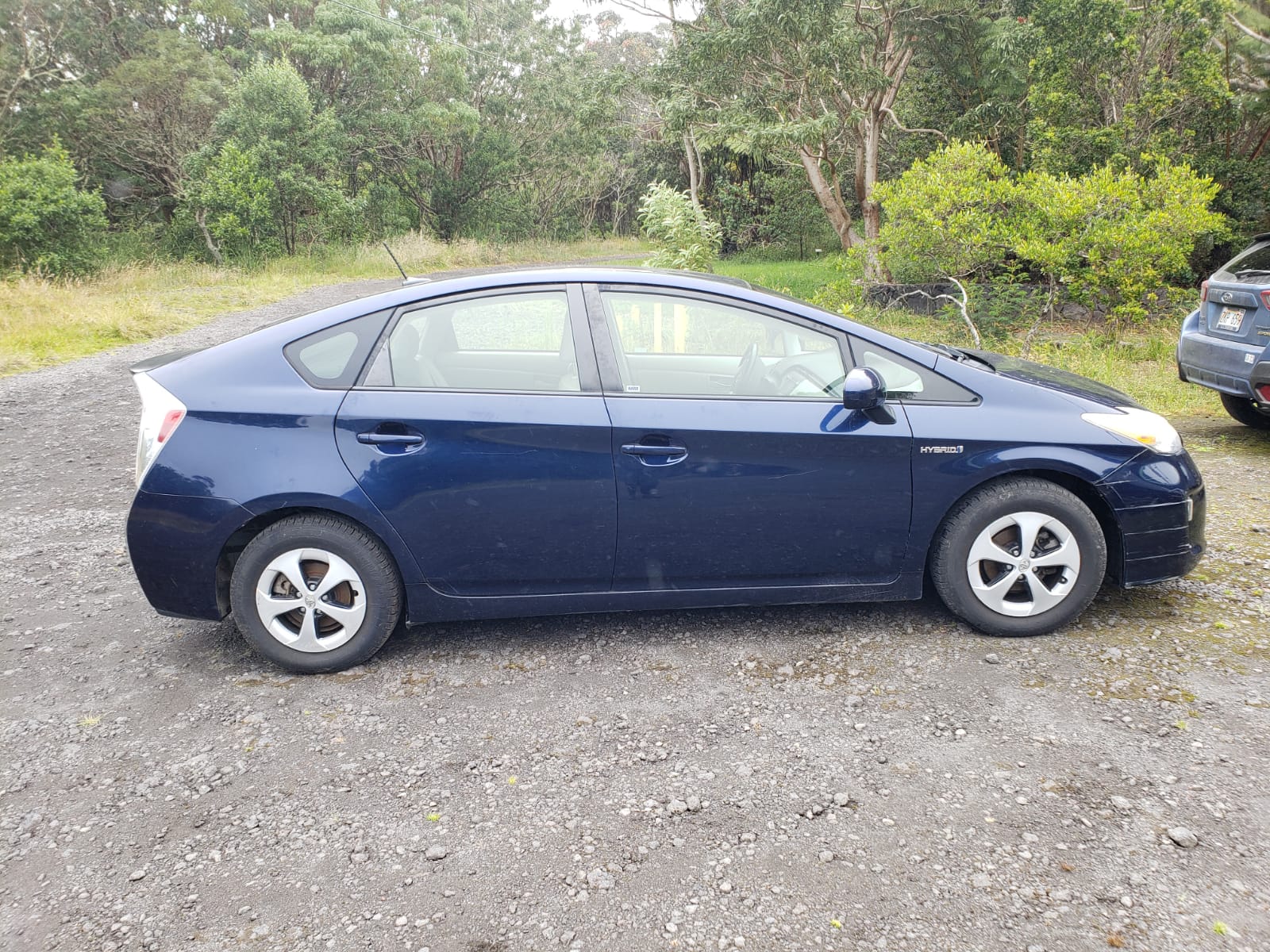
I realize all posts need at least one picture.  So, here is the used Prius we bought from our friend Julie when she left the island.  Less gas!


The other big driver of my life change next time...

Sunday, May 10, 2020

On "believe the women"


First, before you all trash me - I am a lesbian-feminist who was a founding member of Santa Cruz Women Against Rape in 1972. I wrote my thesis on rape in 1976. I have studied the issues of accusations - and false accusations - for over four decades. Originally, I totally bought into the "believe the women" or "believe the children" mantra as so many women and children were not heard or believed when they reported sexual assault. But, then, I kept reading. And realized that the attitude of belief without proof was leading us down a horrible, unjust path for many accused people (generally men, but sometimes women).

My conclusion: there has to be proof beyond a reasonable doubt, or we feminists are THE problem. And the longer the time between the event and the accusations, the more we need to be skeptical of the accusation due to the reality of memory science, and the inability of the accused to fairly defend themselves.

First, do no harm. I knew I did harm when I "believed the children" without critical thinking when I read an article in the now-defunct New West magazine about the McMartin case - how the children were led through manipulation to develop false memories of bizarre sexual and other acts. The manipulator, the unrepentant Kee McFarlane, did the deed. I realized my world view was tilted against justice at that moment in time. It was a life-changer. So I start to think more critically.

Believe the women. Except for the many black men lynched due to false accusations of rape - dozens if not hundreds of them, such as the Scottsboro boys or the alleged rape that led to the Rosewood massacre. Or, in more modern times, the Duke lacrosse case or Rolling Stone's recent Jackie Coakley bogus accusations. 

There are many more, of course. One just has to read individual cases of what happened when the Obama administration created new campus rules re Title IX - the accusations of sexual assault came pouring in. I read about many mouth-gaping Kafkaesque injustices to guys (or, sometimes, accused women). If you don't have knowledge of this problem, a good starting place is to read Emily Yoffe's three-part series in the Atlantic.  You remember the mattress woman at Columbia? I don't believe her; I believe the guy - as did the school, rightly.  If you want to know exactly how this mess happened, this excellent law review article from UC Berkeley "Sex Bureaucracy" explains it very well.

Believe the children. Except for the accusations in the McMartin case, or Country Walk, or Wenatchee, or against Bee Baran, or Kelly Michaels or the San Antonio Four and many more. Virtually all the day care abuse cases of that era were based on false accusations, which became clear to many, and the courts, only with time. 

Believe the women. Except for the many completely unproven charges that women leveled at their fathers or brothers and others under therapist guidance of "recovered memories". I have read extensively on these cases, and many of the charges were later retracted. Basically, our memories are very easy to manipulate. Here is just one article, but there are a library of false accusations from recovered memory, and there are several well-researched books on the subject.

So, I don't. I don't believe the children. I don't believe the women. Except with proof - clear evidence that the accusation happened. And, yes, this equally applies to Kavanaugh as well as Biden.

Women, men and children who accuse someone of sexual assault should not be disbelieved.  This has been the historical - and often current - problem.  The wonderful, three-part Netflix series Unbelievable (based on a true event) shows how that presumption can twist the investigative process. But each accusation has to be compassionately vetted if we care about justice for both the accuser and the accused. 

The statute of limitations exist because it is virtually impossible to prove your innocence from a person-on-person crime (sexual assault being the clearest example) past a reasonable time frame. I believe it is essential protection for an accused person. Therefore, that alone, makes me give Biden the benefit of the doubt.

If the accusation had been within the statute of limitations, presumably there would be a date and time attached. Then, given that he was a Senator, it would be fairly easy to prove if he wasn't there at that date and time, or if others were with him then. He can't do that now. There is nothing he can do except to say "it didn't happen". You tell me - how can he prove the event didn't even happen now or, if some version did, it wasn't as she now recounts??

Whether she is telling the truth or not, I am saying I don't trust her memory (or anyones from 27 years ago - brains don't work that well!!) and I can never know Biden's side of the story because it is lost to history.

The problem with the discourse on accusations is that the assumption is one person is lying, while the other is telling the truth. Reality can be so much more complicated than that. Women often say that they had signaled or said that they were not interested when a man made a sexually aggressive move, while men retort that they were absolutely encouraged. Both could be - some certainly are - telling the truth as they remember it. Now, of course, many men are perfectly well-aware that the woman isn't interested and ignores the lack of consent (Weinstein, Cosby, et. al.) and they are lying.  But some men truly just misunderstood.  It happens all the time and is the reason for the evolution of the "yes means yes" consent standard that is now the law in some states. (Not that I am for that - but it's beyond the scope of this post.)

Then there are just false memories. Again no liar. I think Dylan Farrow is an example of a case in which she believes a false memory. You just needed to read about the case when it was current as I did, and the evidence was all there. It certainly helps to understand memory science and to understand how suggestible kid's (and adults) memories are to realize she was coached into her memories by Mia Farrow, as the investigations concluded. The trouble is - the memories remain (for Dylan and any other such kid whose memory has been tainted in this way, such as the McMartin, et. al. kids).  

And then there are just liars. People like the aforementioned Jackie Coakley. I am not positive about Tara - but I lean to that she is probably telling "her truth" as she remembers at this moment in time.  (Edited to note - time has passed, more evidence has come to light, and I no longer lean to the feeling like she is telling the truth.) Though, she may have made up - or exaggerated something - from the get-go or later as well. I am troubled by various things in her life. Like the fact that she continually praised Biden over the years - on his actions against sexual assault notably - which is just damn odd. I am most troubled by her accusation timing.  So, why not have done this at the beginning of the primaries when it really mattered? Why lie just months earlier, and say there was no sexualization of anything Biden did?

If you believe her and loathe him for this or anything else - just remember he is a tourniquet. Maybe, not the best tourniquet ever. But he will stop the bleeding.  There will be no recovery in our lifetime, if ever, from four more years of Trump.

But, again, since it is impossible for Biden to "prove the truth",  I think in matters of justice, he has to be assumed to be innocent without far more definitive proof.

Monday, April 13, 2020

My Contemplative Conclusions

Anyone who knows me well has probably guessed or assumed that my contemplation on Easter Sunday was aided by a drug.  Indeed it was.  LSD can be a wonderful aid to deep contemplation and profound feeling. I was trying to find a way forward, given my belief that the best part of the America project is, to me, in its death throes. Of course, that project was built on a frail and twisted foundation, but progress seemed to come with every decade since the 1930s--until it stopped. And now we are hurtling backward.  I hope, of course, that I am wrong.  But this contemplation is about what to do if I am right.

Anyway, I did my day: Music for the first five hours. Comedy for the next five hours.  I cried, I laughed.  I grieved.  I came to these conclusions.

1. The centrality of love, person-to person love, as the building block to all good in the world. My favorite orchestral piece makes this point beautifully. 

2. Homogenous communities work best. (Just look at the nations who have dealt with Covid-19 the best - and I include Sweden, even though it is following a completely different path, but the society seems ok with it.) But if you are built, like America, as a nation of disparate immigrants, pluralism must be our guiding light. We need to accept and celebrate true diversity of opinion.  This is what is failing now.

3. The forces on left and right that want to impose cultural hegemony and political hegemony are driving us apart and both sides are resorting to autocratic means to do so. Pluralism is no longer holding us together. 

4. History shows, generally, that those who crave power win over those who put love, justice, kindness and fairness first.

5. I don't want to be them.

6. I want to be like the Jews - specifically secular or lightly religious Jews - who just have my favorite culture in the world, and yet they still integrate beautifully into the broader culture. They are a model for how to survive and thrive in spite of whatever happens. While I am not a MOT (member of the tribe, for those who might not know), I am most definitely a FOT.  I posted this yesterday but if you think you don't know Jewish culture well, this is a great place to start:


7. Side point: at this moment in time, the LDS church should be viewed as a strange-bedfellow ally. While they have differing views about many things, they do believe in the American project in its best sense, they support science and the arts, and they integrate into the wider community. We need to start cross-evangelizing. (I have actually being doing this for years...)

8. How we should be if things go south? The answers are all in the Dave Chappelle Mark Twain award show. (Thanks, Linda for this tip! - you have to have Netflix to see it.) 

But let me quote two things from the show. 

First, I aspire to be what Jon Stewart says Dave Chappelle is:  "I don't know anybody who cares more deeply, and anybody who gives less of a fuck." 

Secondly, what must be done in this time comes from Toni Morrison (Chappelle quoted it to the Saturday Night Live staff right after Trump's election): "This is precisely the time when artists go to work. There is no time for despair, no place for self-pity, no need for silence, no room for fear. We speak, we write, we do language. That is how civilizations heal." I am not much of an artist, but I will support all you true artists. Get to work.

9. The first artistic masterpiece of the Covid-19 era is absolutely this, which you have already seen, but see it again.  This guy's entire career led to this perfect moment.  It's awesome.


Broad conclusion: Go forward with more love. No hate. Limit anger. Be brave but kind.  Brace for "your side" losing. Do art.

I feel more content.